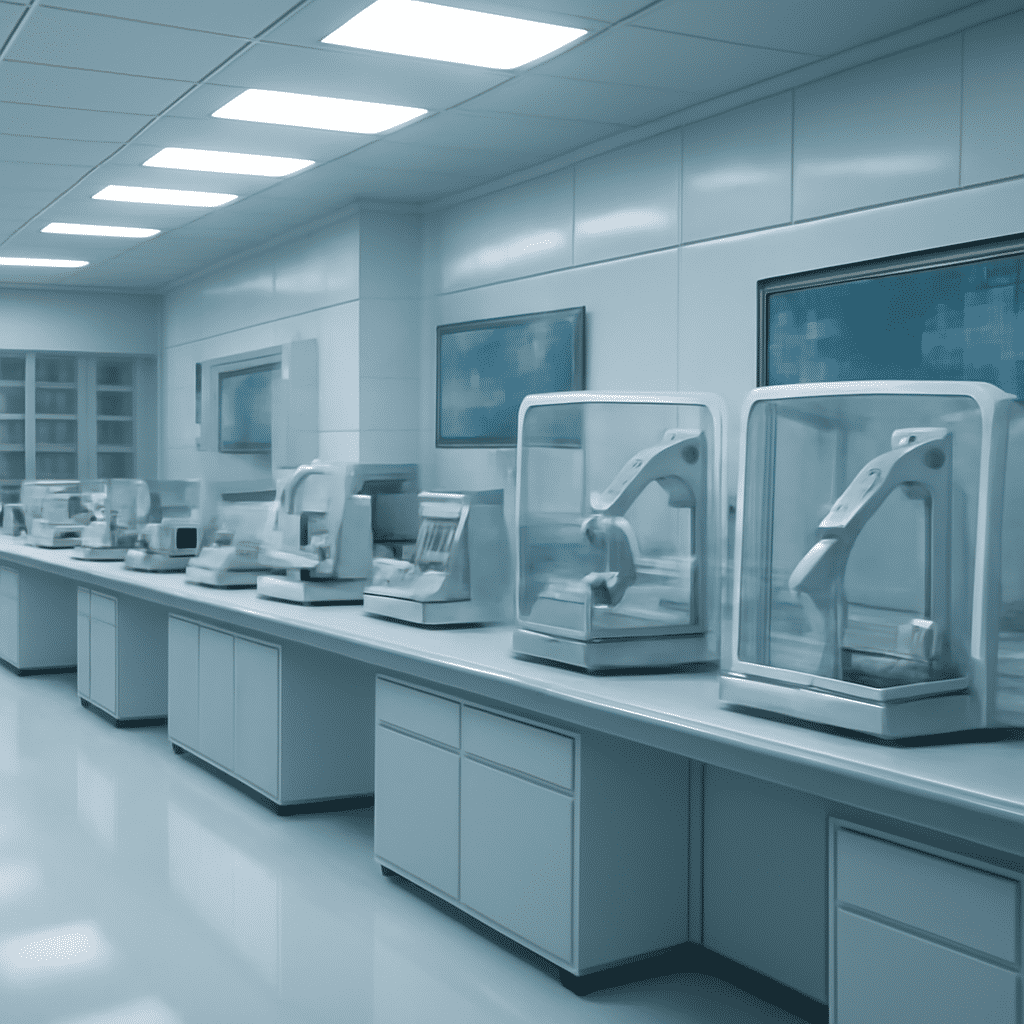
In today's rapidly evolving world of science and technology, the demand for precision and efficiency in laboratory research is greater than ever before. Cutting-edge innovations in laboratory equipment are paving the way for breakthroughs that were previously unimaginable. From automated systems to advanced analytical tools, modern laboratories are being transformed into hubs of innovation and discovery.
At the heart of this transformation are sophisticated instruments designed to enhance precision and accuracy. For instance, next-generation spectrometers now offer unparalleled sensitivity and resolution, allowing scientists to analyze complex samples with astonishing detail. These instruments are vital for fields such as pharmacology and materials science, where subtle differences can have significant impacts on results and applications.
Automation is another critical area of advancement in laboratory equipment. Robotic systems are revolutionizing the way repetitive tasks are performed, reducing human error and increasing throughput. Automated liquid handlers, for example, are streamlining the process of sample preparation, ensuring that experiments are conducted consistently and efficiently. This technology not only frees up valuable time for researchers but also boosts productivity, enabling labs to handle a higher volume of work with greater accuracy.
Meanwhile, the integration of digital technology with traditional laboratory practices is fostering a new era of data-driven research. Advanced software now allows researchers to collect, analyze, and interpret data more effectively than ever before. Machine learning algorithms provide predictive insights that aid in hypothesis generation and experiment design, significantly accelerating the pace of discovery.
Furthermore, ergonomic and sustainable design considerations are being prioritized in the development of new equipment. Manufacturers are focusing on creating user-friendly interfaces and modular systems that enhance the overall laboratory experience. Additionally, the move towards sustainable materials and energy-efficient devices is helping reduce the environmental impact of laboratory operations, aligning scientific exploration with the broader goal of sustainability.
These innovations are not just enhancing the capabilities of individual researchers; they are also fostering greater collaboration across disciplines. With cloud-based collaboration tools, researchers can share data and insights seamlessly, breaking down the traditional silos that have long existed in the scientific community. This collaborative approach not only drives innovation but also accelerates the translation of scientific discoveries into real-world applications.
As we move forward, the continuous evolution of laboratory equipment will likely unlock new possibilities and applications in various fields, ranging from biotechnology and healthcare to environmental science and engineering. By embracing these cutting-edge tools, laboratories worldwide are not just keeping pace with the demands of modern science; they are setting the stage for the next wave of innovation that will shape the future of research and development. In this context, stepping into a laboratory today is truly an opportunity to step into the future.